

LG’s supply track record, Samsung’s joint R&D reinforce Korean battery-makers’ edge
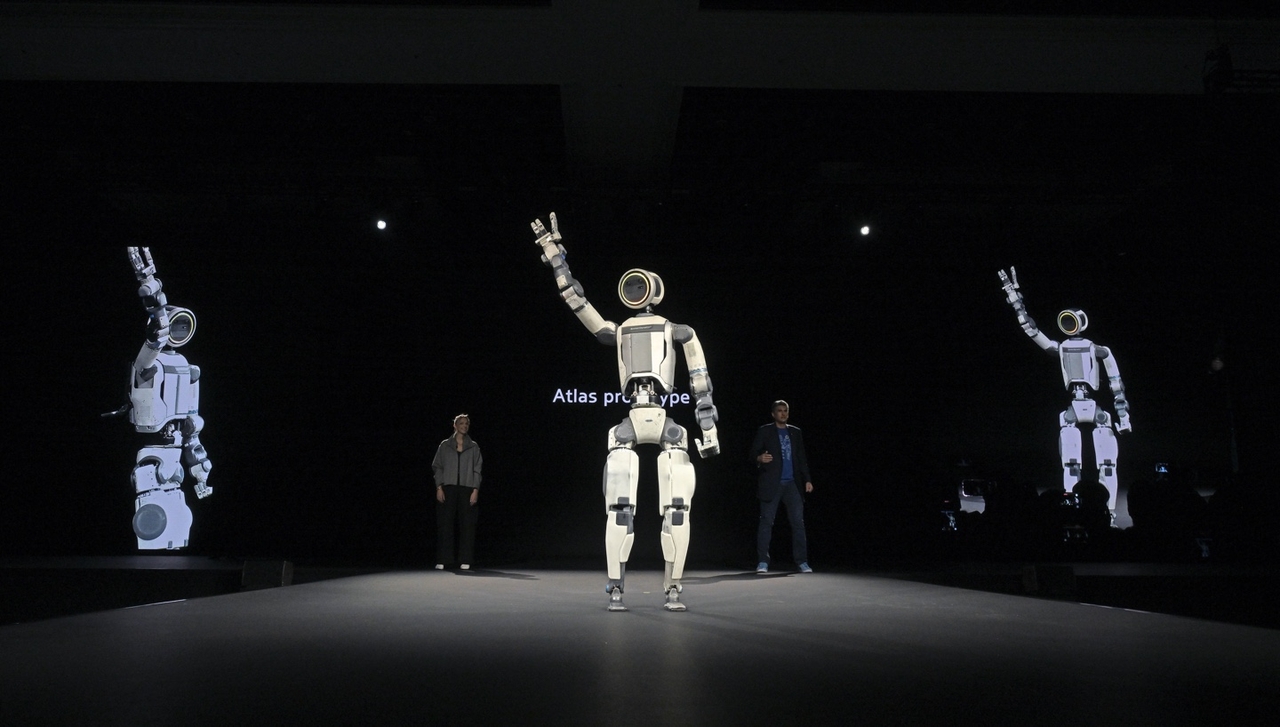
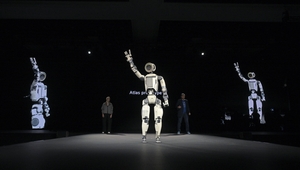
The rapid rise of physical AI robotics has put Hyundai Motor Group’s Atlas humanoid in the spotlight. But as humanoid robots move from demonstrations toward real-world deployment, attention is increasingly shifting to a less visible constraint: the batteries that will determine how long, how reliably, and how safely these systems can operate.
LG Energy Solution and Samsung SDI, already integrated into Hyundai’s broader robotics ecosystem, are emerging as key contenders. While batteries account for only a small share of a robot’s overall cost, their performance increasingly defines the ceiling for humanoid capabilities — from operating time and payload to autonomy and task complexity.
In that sense, the competition to supply Atlas is less about near-term revenue than about strategic positioning. Securing an early reference in humanoid robotics would give battery-makers a critical foothold in a market that is still nascent but widely viewed as a long-term growth frontier.
Why energy density matters
Humanoid robots closely mimic the human body, leaving battery space largely confined to the chest — a far tighter constraint than in electric vehicles. As a result, energy density becomes a decisive factor.
Industry insiders say this favors nickel-based lithium-ion batteries, a segment led by Korean manufacturers, over lithium iron phosphate (LFP) batteries, which are dominated by Chinese suppliers. While LFP cells are cheaper and carry a lower fire risk, they are heavier and offer roughly 30 percent lower energy density, limiting operating time for humanoid robots.
Among battery form factors — pouch, prismatic and cylindrical — cylindrical cells are widely considered the best fit for humanoids. They are structurally robust in constantly moving systems and flexible enough to be packed into confined, irregular spaces.
LG Energy Solution and Samsung SDI currently offer two main cylindrical formats: the 21700 cell — 21 millimeters in diameter and 70 millimeters in height — and the more advanced 4680 series, which delivers higher energy density and greater power output.
According to a researcher at a major battery firm, Atlas is likely to adopt 4680-format cells, given its reported 3.7-kilowatt-hour battery capacity. “Using 21700 cells would require more than 200 units to reach that level of energy, resulting in a larger, less practical pack when space is limited,” the researcher said. “A 4680 design makes more sense, requiring only around 40 cells, which can fit more easily into the robot’s chest.”
LG’s early robotics edge
LG Energy Solution is viewed as a strong contender to power Atlas, having built an early lead by supplying nickel-cobalt-manganese-aluminum lithium-ion batteries to a range of robotics customers.
Last October, the company was reported to have continued supplying batteries for Boston Dynamics’ Spot platform, including both Spot 1.0 and the upgraded Spot 2.0. The four-legged robot, developed by Hyundai Motor Group’s US-based robotics unit, is believed to use 2170 cylindrical cells, with several dozen installed per unit.
LG’s 4680-series cylindrical cells are also reportedly being considered as a power source for Tesla’s Optimus humanoid robot — a key rival to Atlas — though the company declined to confirm the discussions.
LG’s disclosed robotics battery deals date back to 2024, when it agreed to exclusively supply 2170 cylindrical cells from the following year to California-based Bear Robotics for its logistics, service and industrial robots. The company also showcased Naver Labs’ service robot Rookie, powered by its cylindrical cells, at a battery technology exhibition in Seoul last year.
Samsung and Hyundai’s close R&D ties
Samsung SDI’s advantage, by contrast, lies in its deep research ties with Hyundai Motor Group. The battery-maker already supplies 21700 cylindrical cells for Hyundai’s service robot DAL-e and its mobile robotics platform MobED.
In February last year, Samsung SDI and Hyundai Motor Group agreed to jointly develop high-performance batteries specifically tailored for robotic applications. Under the partnership, Samsung SDI is focusing on boosting energy density, efficiency and cost competitiveness through advanced materials and optimized cell design, while Hyundai’s Robotics Lab handles real-world integration, performance validation and lifecycle testing.
Samsung SDI has noted that most robots today rely on batteries originally designed for power tools or light electric vehicles — products ill-suited to robots’ tight and irregular battery spaces. Industry insiders see the partnership as an effort to move beyond conventional 21700 cylindrical cells.
It remains unclear whether the collaboration will extend to next-generation chemistries such as sodium-ion, lithium-metal or all-solid-state batteries.
Still, sources say enabling Atlas to perform more complex manufacturing tasks will eventually require a shift beyond conventional lithium-ion technology. At present, Atlas can operate for three to four hours under low-intensity conditions and is capable of autonomously swapping its own batteries.
“All-solid-state batteries have clear advantages, but they must be commercially viable,” said an industry source, speaking on condition of anonymity. “By the time that happens, more cost-effective technologies are also likely to be in mass production. Using expensive solid-state batteries would only drive up the already high cost of humanoid robots. In the end, price optimization will be one of the most critical factors for large-scale production and adoption.”
hyejin2@heraldcorp.com