
Table Of Content
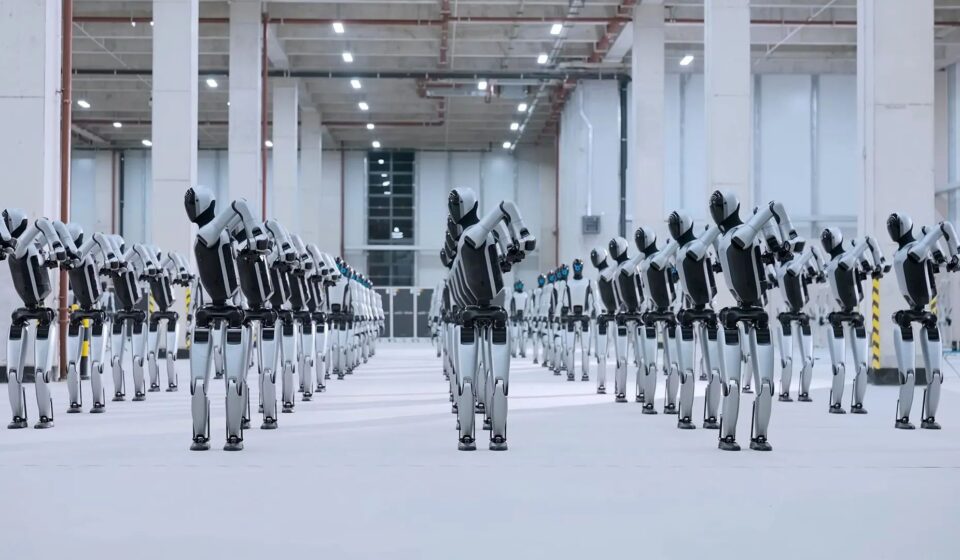
Chinese humanoid robotics developer UBTech Robotics said on Sunday that it has reached a new agreement with European aviation leader Airbus to supply robots for use inside aircraft manufacturing facilities.
The deal marks a fresh milestone in the company’s push to take its industrial humanoid robots beyond China and into some of the world’s most demanding production environments.
Under the agreement, the aviation company has purchased the Chinese firm’s Walker S2 humanoid robot and will work with the developer to explore how robots can support aircraft manufacturing tasks.
Aviation factories become the next testing ground
The robotics developer said the partnership will focus on testing and deploying humanoid robots in aviation manufacturing settings. Aircraft production requires high precision, strict safety standards, and reliable performance, making it a challenging environment for robotics.
The Walker S2 was introduced in July last year and is designed specifically for industrial use. The robot stands about 5.8 feet tall and features dexterous arms and hands, along with a vision system that allows it to perceive its surroundings and move in a humanlike way within factories.
Working with a major aircraft manufacturer will help validate the robot’s capabilities in complex real-world conditions. Aviation is seen as a key sector where humanoid robots could take on repetitive and physically demanding tasks while supporting human workers.
Walker S2 built for nonstop industrial work
The Walker S2 can carry loads of up to 33 pounds and is equipped with the company’s self-developed Co Agent artificial intelligence system. This AI platform allows the robot to coordinate movements, recognize objects, and adapt to different tasks on production lines.
One of the robot’s standout features is its autonomous battery-swapping system. This technology allows the robot to operate around the clock without long charging breaks, an advantage for smart factories that run continuously.
Since its launch, the Walker S2 has been adopted by companies across multiple industries. Carmaker BYD and electronics manufacturing giant Foxconn have already introduced the robot into their facilities, expanding its use beyond pilot programs.
As of December 26, 1,000 Walker S2 units had been produced at the company’s factory in Liuzhou, southern China, according to local media. This growing output reflects rising demand for humanoid robots in industrial settings.
Overseas partnerships gain momentum
The Airbus deal follows a similar partnership signed last month with US semiconductor company Texas Instruments. TI has been deploying and testing the Walker S2 on its production lines, according to a report by state-run Securities Times.
These agreements demonstrate the robotics firm’s accelerated push into overseas markets in sectors such as aviation, semiconductors, vehicle manufacturing, and consumer electronics. The company aims to position its humanoid robots as flexible tools that can move between different factory environments.
Rapid growth fuels investor interest
Founded in 2012 in Shenzhen, one of China’s main technology hubs, the humanoid robotics company became the first Chinese humanoid robotics startup to list publicly when it debuted in Hong Kong at the end of 2023.
The company said orders for its humanoid robots reached 1.4 billion yuan ($201 million) last year. It expects to ship tens of thousands of industrial humanoid robots this year as production scales up.
Investor confidence followed the latest announcement. UBTech shares rose 6.76 percent to HK$142.20 during midday trading on Monday.