Atlas Humanoid Robots Production ‘Fully Committed’ For 2026, Factory Will Build 30,000 Per Year

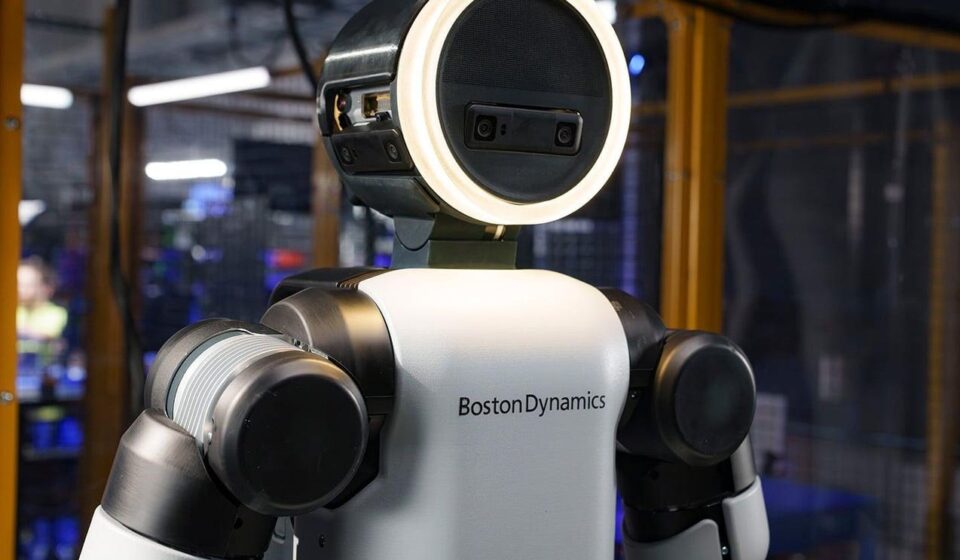
Boston Dynamics new Atlas is a powerful and capable humanoid robot. It’s shipping in limited numbers to partners right now, but the company plans to eventually ship 30,000 per year.
Boston Dynamics
Boston Dynamics unveiled its latest Atlas humanoid robot this week at the Consumer Electronics Show in Las Vegas, and its entire production run for 2026 is already sold and accounted for. And its majority owner Hyundai Motor Group has plans to build a robot factory that can ship 30,000 robots a year.
“For more than 30 years, Boston Dynamics has been building some of the world’s most advanced robots,” Robert Playter, CEO of Boston Dynamics, said in a statement. “This is the best robot we have ever built. Atlas is going to revolutionize the way industry works, and it marks the first step toward a long-term goal we have dreamed about since we were children–useful robots that can walk into our homes and help make our lives safer, more productive, and more fulfilling.”
That’s an interesting quote, because while the first year’s production run of Atlas robots will go to Hyundai (which owns 80% of Boston Dynamics) and Google DeepMind (which Boston Dynamics is partnering with on AI for its robots), Playter specifically calls out the home. Not the factory, not the warehouse, not the farm: the home.
The new Atlas, however, is designed for hard labor. It can carry up to 110 pounds briefly, and 66 pounds for longer periods of time. One-handed, Atlas can carry 44 pounds, which is significantly higher than most humanoid robots, including the very robust EngineAI T800. It offers 56 degrees of freedom, reaches to 7.5 feet overhead, and weighs in at 198 pounds. Unlike the first Atlas robots that used hydraulics for motors, this is fully electric, like all the modern humanoid robots being shipped today.
Some of Boston Dynamics’ specifications for its Atlas humanoid robot.
John Koetsier
It has four-hour battery life, and can swap its own batteries for continuous work in just three minutes. Atlas also is rated at IP67 to work in wet environments, and can operate from -20 to 40 degrees Celsius, or -4 to 104 degrees Fahrenheit.
While the brains are being further developed in conjunction with Google DeepMind, Boston Dynamics can already integrate with industrial management and warehouse management systems, theoretically enabling smooth integration with work requirements. Atlas robots can currently run autonomously, be teleoperated, or run via a tablet, but the new physical AI foundation models Google will bring to the table will be a game-changer.
“We are thrilled to be partnering with the Google DeepMind team,” Alberto Rodriguez, a director at Boston Dynamics, said in a statement. “We are building the world’s most capable humanoid, and we knew we needed a partner that could help us establish new kinds of visual-language-action models for these complex robots. Nobody in the world is better suited than DeepMind to build reliable, scalable models that can be deployed safely and efficiently across a wide variety of tasks and industries.”
Currently, Boston Dynamics says that Atlas can:
- fulfill orders
- handle materials
- learn new tasks
- adapt to changing environments
- lift heavy loads
- work autonomously
- share new knowledge with other Atlas robots
With Google DeepMind, Boston Dynamics aims to help Atlas understand more about the physical world and be able to accomplish more complex tasks out of the box, while working safely around humans.
That will be very helpful for home environments as well, as Atlas becomes commercially available.
Boston Dynamics has a long road ahead of it, however. Agibot says it has shipped 5,000 robots already, and multiple other humanoid robot manufacturers have extensive trials that have been ongoing for almost a year now.
But the company, and its parent Hyundai, is investing heavily.
Hyundai has said it’s preparing to deploy “tens of thousands” of Boston Dynamics robots at its manufacturing facilities over the “next few years,” and it plans to build a new robot factory capable of building 30,000 robots per year as part of a $26 billion investment in the United States.
That plan was announced in August of 2025, but it’s unclear when the robot factory will break ground or start shipping Atlas robots to customers.
Other robot manufacturers also have big plans: Silicon Valley-based Foundation plans to build 50,000 by the end of 2027.